Youth Baseball Field Positions: A Trait-Based Guide
Match all nine youth baseball positions to traits you can see at practice: throwing, catching, footwork, and attention, plus fair infield-inning planning.
Last updated November 4, 2026
By Jeremy Phillips, Youth Sports Coach and League Director
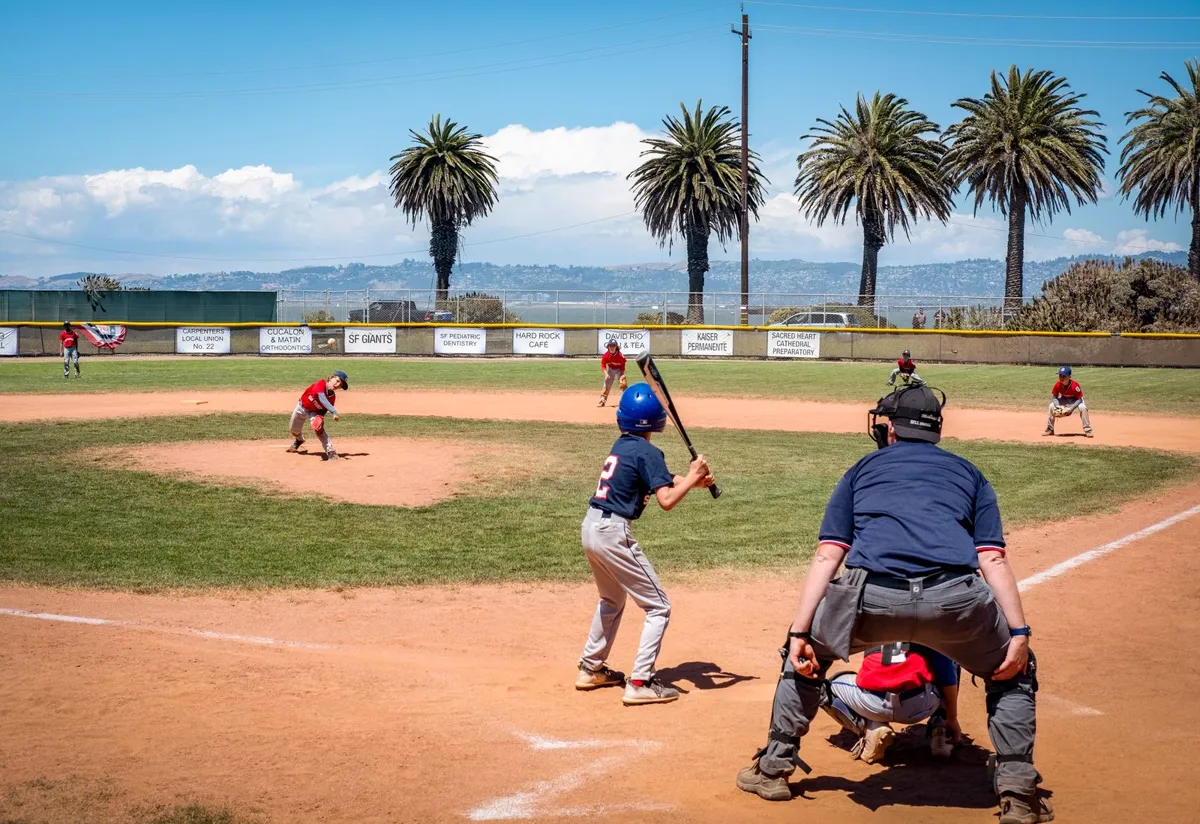
Every kid on a recreational roster needs a spot, and youth baseball field positions are not interchangeable: pitching demands a reliable arm, first base demands reliable catches, and right field demands patience. This guide maps all nine positions to traits you can observe at practice, so you can build a fair lineup card that satisfies your league's minimum-play rule.
What are the nine field positions in youth baseball?
Baseball uses a standard numbering system, 1 through 9, that scorekeepers and scoreboards rely on. Little League's official rules and scorekeeping materials use the same numbering convention, which you can see in their Little League scorekeeping guidance.
Position numbers 1-9 and what each spot actually does
| # | Position | One-line job |
|---|---|---|
| 1 | Pitcher | Throws to the batter, fields balls hit back through the middle |
| 2 | Catcher | Catches pitches, fields bunts and plays at the plate |
| 3 | First base | Catches throws, fields balls hit to the right side |
| 4 | Second base | Covers second, fields grounders between first and second |
| 5 | Third base | Fields the hot corner, makes the long throw across the diamond |
| 6 | Shortstop | Fields most ground balls, covers second on steals |
| 7 | Left field | Fields balls hit to the left side of the outfield |
| 8 | Center field | Covers the most ground, backs up second and third |
| 9 | Right field | Fields the right side, backs up first base |
Where the catcher and pitcher fit differently in rec ball
In kid pitch, 1 and 2 are skilled spots you rotate carefully. In tee ball and coach pitch, the pitcher fields like a fifth infielder and the catcher is often just a kid in gear chasing missed balls. Either way, your 2-infield-innings rule still applies, and a lineup that spreads those innings fairly is easier to build ahead of time (see a sample lineup).
What skills does each youth baseball position require?
Every position asks for some mix of four things: throwing, catching, footwork, and attention. The mix changes by spot, and knowing the mix is how you match kids instead of guessing.
Arm strength and accuracy demands by position
Pitcher and catcher need the strongest, most accurate arms. Shortstop and third base need quick release more than raw distance. First base mostly needs to catch whatever arrives.
Catch reliability and reaction window
First base is the catching position: hard throws, small target, every error costs a base. Catcher demands blocking and quick hands. The outfield gives the longest reaction window, which is why it suits kids still building hands.
Attention span: which positions punish daydreamers
The honest ranking of attention demands is the part most position guides skip. Catcher is in every play and cannot drift for one pitch. Pitcher and middle infielders sit behind the ball and must read it off the bat instantly. Third base reacts in a fraction of a second on hard grounders, and first base has to stay locked in because any throw in the game might come its way. Corner outfield and right field in particular allow longer lapses, which is exactly why recreational leagues park beginners there, and why kids invent nicknames for it. If you are juggling a 2-inning infield rule with a roster of mixed attention spans, planning the rotation series by series before game day beats improvising it in the dugout, which is the whole problem we built Plays Manager to solve.
Which position should a beginner play first?
Start brand-new players where the ball comes to them, not where they have to make the first throw. Tee ball and coach pitch kids do best at first base, pitcher's helper, or the outfield corners: spots with defined jobs and few split-second reads. Save pitcher and catcher for kids with confirmed throwing control and attention, since those two positions carry safety and pace-of-game rules you do not want a first-timer learning mid-inning. Little League caps how often and how much a kid can pitch at each age, which is another reason not to hand a beginner the ball.
Why first base is a better beginner spot than shortstop
Shortstop gets the most ground balls and the hardest throws across the diamond; one missed read and the whole inning unravels. First base gets steady, catchable throws from every infielder, so a new kid gets reps catching under real game pressure without needing a cannon. Track who is actually touching the ball when you build each lineup card, and if your league enforces minimum infield innings, plan the rotation before game day with the baseball lineup tools.
How do you match a kid's traits to the right position?
The three-question trait check
Ask three questions about each kid before you write a lineup card. First, throwing: can they make an accurate throw 40-60 feet under game pressure, or does it sail or bounce? Second, catching: do they field a grounder cleanly and catch a thrown ball, or just chase it? Third, attention: do they track every pitch, or drift after two outs?
Strong arm plus decent catching points to pitcher, catcher, or third. Weak arm but clean hands points to second. Great attention with a developing arm points to center field. The kid who drifts goes to right field early in the season, not as punishment.
Worked example: assigning a 10-player rec roster
Say four kids pass the trait check cleanly: two strong arms to pitcher and catcher, clean hands to second and third. The next three get first base and the outfield corners. The last three, including your drifters, split right field and backup roles, and you promise them first shot when someone struggles.
The same three questions work beyond baseball. The attention check matters just as much when you're setting basketball rotations, which is why we built the trait logic into Plays Manager for every sport on one roster.
How do you assign positions fairly when every kid wants to pitch?
Pitching is the one position where fairness and safety collide. Every kid wants the ball, but your league's minimum-play rule does not override pitch count limits, and neither does a parent's opinion from the bleachers. Set your rotation before game day: decide which innings are pitching windows, who is eligible in each one, and what your cap is per kid per game.
Pitch count and innings caps you should know
Pitch Smart guidelines scale by age, so a 10-year-old and a 14-year-old have very different ceilings. Build your rotation around the stricter of your league rule or the age-based cap, and never let a kid pitch two positions' worth of innings when the roster rule says two infield innings for everyone. If you coach multiple sports, the same series-by-series logic applies; our football rotation guide covers minimum-play math in detail.
Using sub windows to give everyone a taste of the infield
Split the game into sub windows and assign each one an infield slot for a different kid. One inning at third counts toward their infield innings and scratches the pitching itch for a lot of them. Tell parents the plan before the first pitch, not after the final out.
How do position responsibilities differ between tee ball, coach pitch, and kid pitch?
Tee ball: everyone touches the ball
Positions barely exist. Every fielder charges the ball on contact, and the first baseman and pitcher are just the two kids closest to it. Rotate everyone through pitcher and first each inning so nobody plants a flag on a spot.
Coach pitch: teaching throws to the right base
Jobs start to matter. The second baseman learns to cover first when the first baseman fields a grounder, and the catcher starts making actual throws down to first on dropped third strikes. Your job as coach is calling out the target base before every play.
Kid pitch: real positions emerge
Pitchers and catchers carry real workloads, so manage them accordingly. Little League sets pitch counts by league age, and a 10-year-old who pitches one day needs rest days before throwing again. That limit should shape your rotation plan before game day, not after a kid has thrown too many.
Why do kids give funny nicknames to positions like right field, and does it matter?
The right field problem: myth vs. reality
In tee ball and coach pitch, most batters pull the ball, so right field sees the least action. Kids notice, and the nickname writes itself: right field becomes the bench with grass. The reality is that right field still demands a catchable throw to first and pays off big once hitters start going opposite way in kid pitch.
The myth matters because kids hear it from teammates and parents before they hear it from you. If you assign your weakest thrower there without a word, you confirm the joke. Instead, tell the kid exactly what right field is for on your roster: backing up first, taking any ball hit to the gap, and making one clean throw a game.
Turning nicknames into teaching moments
Lean into the names instead of banning them. Let kids invent their own label for each spot, then attach a real job to it: the "hot corner" gets the hard grounders, the "vacuum" at first picks everything out of the dirt. A kid with a funny name and a real responsibility stops feeling parked.
Rotate the joke positions like any other spot on your lineup card, series by series, so no one owns right field for a season. Fair rotation kills the stigma faster than any speech.
When should a youth player switch positions?
Watch for four signs a kid has outgrown a spot: a growth spurt that changes their throwing motion, a skill jump like a catcher who now throws runners out easily, visible boredom in right field, or a safety concern such as a first baseman flinching at hard throws.
Four signs it's time to move a kid
Growth and skill are the easy ones. Boredom shows up as lost focus between pitches. Safety is the one you act on immediately, not at next practice.
How to make the switch without hurting feelings
Frame the move as a promotion with a reason: "You're throwing too hard for right field, so you're my new third baseman." Positive Coaching Alliance advises framing feedback around effort and specific next steps rather than criticism. Announce changes at practice, not mid-game, and give the old spot a send-off so the kid doesn't hear "demotion" from the dugout.
How do you build a lineup card that hits every position across the game?
Planning innings by position, not by inning
Work backward from the rule, not forward from the first inning. If your league requires 2 infield innings per kid, count infield slots first: 6 positions times however many innings you expect to play gives you the total infield inventory to distribute. A 12-player roster over 6 innings means 36 infield slots, so each kid needs at least 2 and you have 12 slots of slack for kids who want more. Fill catcher and pitching last, since those carry safety limits.
Then spot the kids who can handle first base, and let the outfield absorb everyone still building throwing accuracy. Write the grid out before the season starts, not on game morning, because a rain-shortened game or a no-show parent will force you to reshuffle mid-game. If you can rebuild the rotation in under two minutes on paper, the rule takes care of itself.
Tools that automate the check
A paper lineup card works, but the arithmetic is where volunteer coaches slip, especially mid-game after a rain delay. Tools like LineUp Max, GameReadyX, and SubTime handle rotation tracking, and TeamSnap covers rosters and communication. Plays Manager, our own product at $9.99/month, builds the card series by series and flags a kid short on their 2 infield innings before first pitch, not after the game. Honest limitation: it covers baseball, football, soccer, and basketball rotations, but it will not scout talent for you, and a coach who ignores the flags can still break the rule. The card is the check, not the coach.
FAQ
What is the easiest position in youth baseball for a shy kid?
Right field or left field. The outfield corners give the longest reaction window, fewest balls per game, and no pressure to make the first throw. A shy kid gets real reps without the spotlight that catcher, pitcher, or shortstop carry. Attach a concrete job, like backing up first base, so the spot feels like a role rather than a parking place.
Can a player play the same position the whole game in rec league?
Usually no. Most recreational leagues enforce minimum-play or minimum-infield-innings rules, and a kid parked at one spot all game typically violates them. Check your league's bylaws because the exact requirement varies. Even where it is legal, rotating builds skills and kills the resentment that comes when one kid owns a position while others cycle through the outfield.
How many innings should a kid pitch in a youth season?
Follow the stricter of your league rule or age-based pitch count caps like Pitch Smart's. Caps scale by league age, and a kid who pitches one day needs rest days before throwing again. There is no single season total to aim for; track per-game counts and recovery, since a 10-year-old and a 14-year-old have very different ceilings.
Do position numbers matter for scorekeeping in youth baseball?
Yes. The 1-through-9 numbering system is how scorekeepers and scoreboards record plays, and Little League's scorekeeping materials use the same convention. A grounder to shortstop is a 6-3 out, pitcher to first is 1-3. Teach kids their number early; it makes scorekeeping chatter legible and shows every defensive spot has a defined identity.
Sources
Try it for your team
Plays Manager plans your rotation before kickoff so every kid gets their minutes.